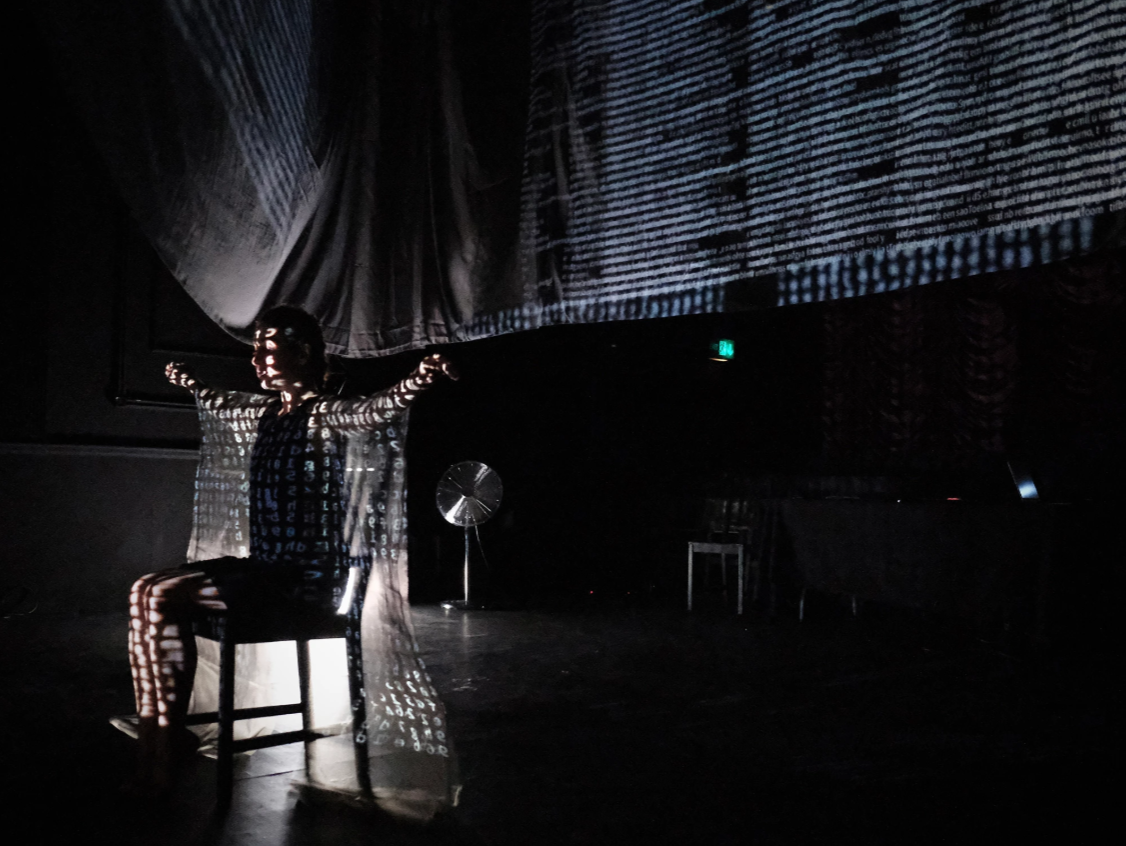
Memory Journey is a prototype for an immersive art installation that transforms personal memories into generative visuals through real-time voice input, AI processing, and projection-mapped imagery.
Created as part of a government-funded initiative in South Korea, the piece explores how memory can be felt as light, movement, and colour. Though not a full-scale installation, the prototype laid the technical and conceptual groundwork for a future interactive space where personal reflection and generative art converge.
Problem
Personal memories are often difficult to externalise. They live as fragments of voice, feeling, and image, but rarely find a form others can see or share. Traditional journaling captures words, yet misses the sensory and emotional texture of how a memory actually feels.
We wanted to explore whether technology could bridge that gap: not to analyse or fix memories, but to give them a visible, spatial presence that invites quiet reflection.
Concept
Memory Journey turns a spoken memory into a living visual field. A visitor records a story through a web interface, selects emotional filters that shape the mood of the piece, and watches as AI-processed input drives generative visuals in Processing, projected onto layered fabrics in a dark, meditative room.
The installation treats memory as something to witness rather than interpret. Light passes through translucent surfaces, patterns shift in response to tone and chosen filters, and the physical space becomes a canvas for something deeply personal yet shared.
Experience Flow
1. Memory input via web interface
Users visit a custom website to record a personal memory in their own language. Before speaking, they choose three emotional filters that shape how the visual system responds:
Time
Recent or distant memory
Feeling
Positive or negative emotion
Consciousness
Vivid or faint recollection
2. AI processing
Voice input is transcribed using OpenAI Whisper. GPT then reads the text to extract tone and key concepts from what the user shared. These outputs, together with the three filters, are passed forward as parameters for the visual system.
3. Generative visuals in Processing
Insights from the analysis are sent to Processing, where generative visuals are built in real time. Colour, motion, and density respond to the emotional filters and the character of the spoken memory, so each projection is unique to the person who recorded it.
4. Real-time projection mapping
The visuals are projection-mapped onto layered fabrics, creating a soft, immersive environment where memories appear as shifting light. The physical installation wraps the viewer in a meditative space shaped by their own words.
System Design
The prototype connects a lightweight web client, cloud AI APIs, and a local generative art pipeline into one continuous flow from voice to projected image.
Web Voice Input→Emotional Filters→Whisper Transcription→GPT Tone & Concepts→Processing Visuals→Projection Mapping
Core Features
1. Multilingual Web Input
Visitors record memories through a custom web interface, with three emotional filters applied before speech to shape the visual response.
2. AI-Assisted Memory Processing
Whisper transcribes voice input and GPT extracts tone and key concepts, feeding structured parameters into the generative system.
3. Real-Time Generative Art
Processing builds unique visuals on the fly, driven by emotional filters and the content of each recorded memory.
4. Fabric Projection Mapping
Layered textiles in a dark room become the surface for projection, turning digital patterns into a tactile, immersive atmosphere.
Recognition
The prototype was developed and tested at The Coronet Theatre in London, where initial interaction and visual flow were explored in a physical context.
A documentary video of the project was later showcased at Musinsa Studio Hannam (1st Branch) in Seoul during a curated concept screening on December 1–2, 2023.